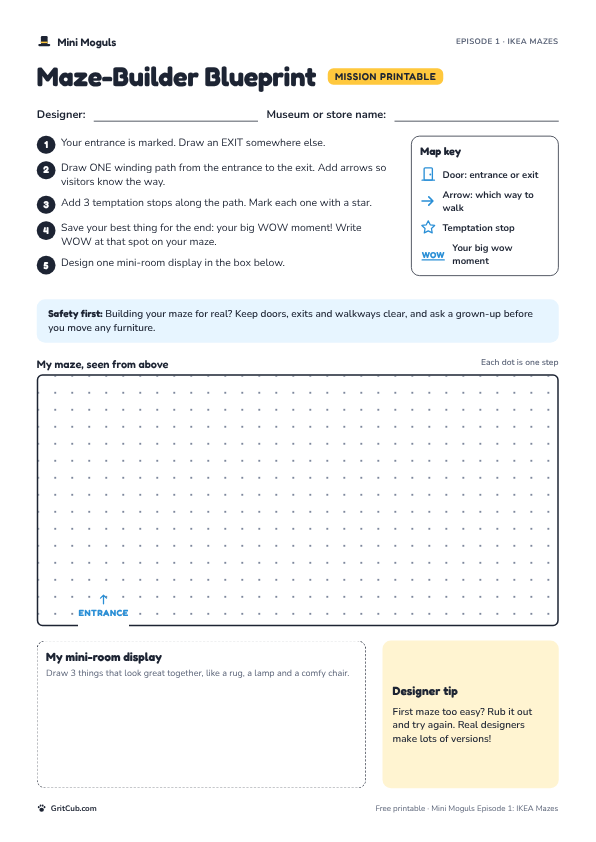
Maze-Builder Blueprint
Draw your own one-way maze from above, add three temptation stops, save a big wow moment for the end, and design a mini-room display.
How Stores Get You to Buy More
Why does IKEA send you along one long, winding path with arrows on the floor? Maya and Leo follow the maze, find out why the room displays make you stop and dream, and learn how to keep your own brain in charge of the basket.
Inside this episode
Some big stores, like IKEA, lead you along one winding, one-way path. Arrows on the floor show the way, and the path takes you past almost everything in the store.
Along the way, things are set out as whole rooms: a bed with lamps, rugs and cushions, or a desk with pens and a reading light. You can picture it in your own home, so you slow down, get ideas, and often pick up things you didn't plan to buy.
There are shortcuts between sections. They're shown on the store map, but they're easy to miss!
When a winding store layout makes people slow down and explore, it's called the Gruen effect (or the Gruen transfer). It's named after Victor Gruen, an architect who designed some of the first big shopping malls.
A bit of both. Seeing ideas laid out can help you spot something that fixes a real problem at home. But a path built to slow you down also makes it easier to buy things you didn't need. Once you know how the maze works, you can enjoy the ideas and still decide for yourself.
Try it at home
Turn your bedroom or living room into a Mini Museum or a store for your family to visit. Use cushions to make a wiggly, one-way path so visitors walk past your LEGO builds and a cozy reading corner first, and finish at your big wow moment, like your art wall. What would you put at the end of your path? Tell a grown-up your idea.
Free mission printables
Draw your own one-way maze from above, add three temptation stops, save a big wow moment for the end, and design a mini-room display.
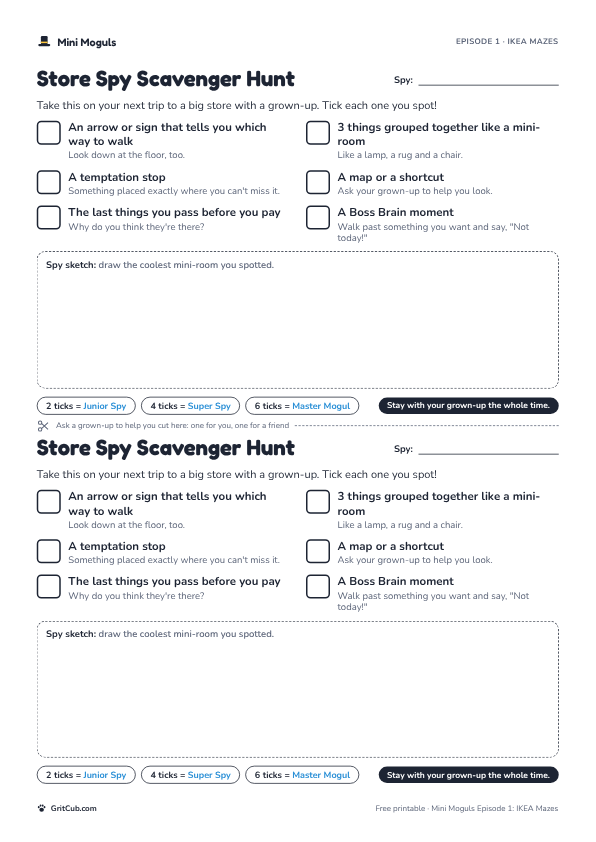
A pocket checklist for your next trip to a big store with a grown-up. Two copies per page, so a friend can play too.
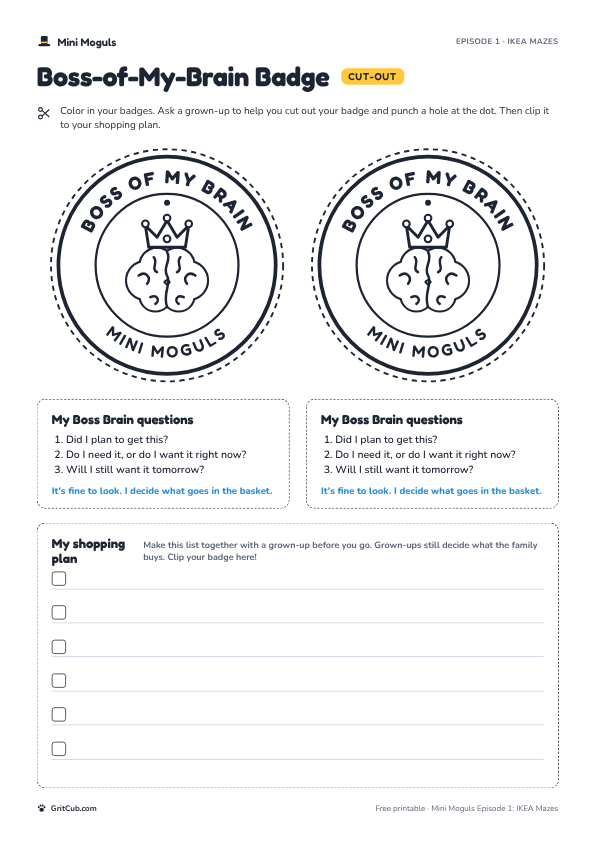
Color it in, cut it out with a grown-up, and clip it to the shopping plan you make together. Comes with a pocket card of Boss Brain questions.
For grown-ups
Noticing that everyday spaces, like floor arrows and one-way paths, are designed on purpose, and asking why.
Seeing how a business shows off its ideas while your child stays in charge of what goes in the basket. When they build their own museum or store at home, the goal is to guide visitors to the good stuff, not to trick them.
For the car ride home
Mini Moguls isn't connected to or paid by IKEA or any other company in this episode. We name real places so kids recognise them.
Sources we checked: